ChatGPT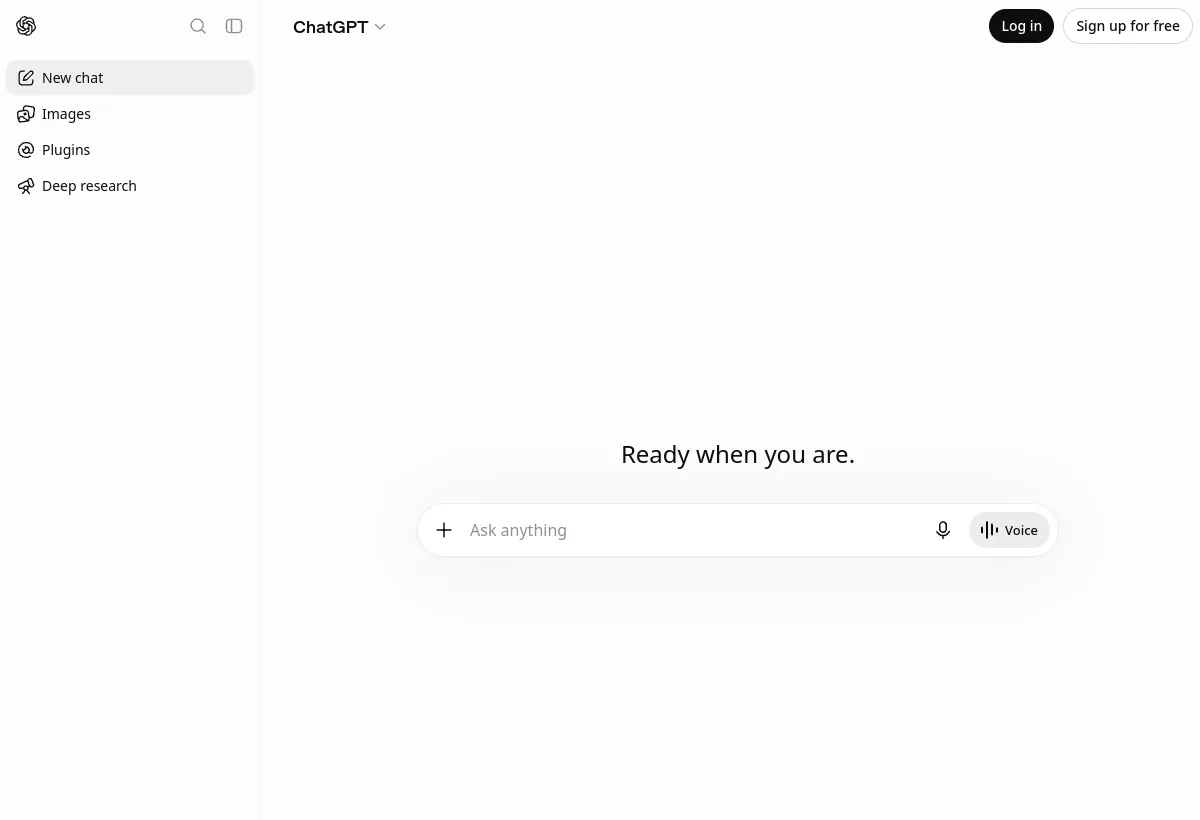
Is ChatGPT worth it?
Yes for teams that want one AI layer across documents, spreadsheets, code, research, and desktop agent work. OpenAI’s public ladder on openai.com/chatgpt/pricing (same content as chatgpt.com/pricing) as of August 19, 2026 is Free at $0, Go at $8 per month, Plus at $20 per month, Pro from $100 per month, Business at $20 per user per month billed annually or $25 billed monthly, and Enterprise by sales quote. GPT-5.6 Sol, the current flagship reasoning model on the comparison table, is not on Free or Go. ChatGPT Work is limited to the desktop app on those two plans. Codex is limited there as well.
Best for knowledge workers, analysts, and mixed product teams that will actually use connected apps and finished deliverables. It is a poor buy if your primary need is ticket deflection with human escalation. That job belongs on a support agent platform, not a chat subscription. It is also a poor buy if every user only needs Luna-class chat: Go or Free will do, and Plus is wasted money.
How we evaluated this
We scored ChatGPT as a general assistant and team workspace, not a support bot. Weights: model access, agent depth (Work and Codex finishing a real file), data control, surface coverage, and pricing honesty (seats versus credits, ads on Go, unlimited guardrails). On August 19, 2026 we read the official pricing page, the ChatGPT Business help article, the Business product page, and linked privacy pages. We did not run a multi-week production pilot or review Enterprise contracts under NDA.
Cost model
Buy seats by model access, then mix Standard and heavy users
The expensive mistake is treating ChatGPT as “$20 each.” OpenAI prices consumer plans per user per month and Business per user with annual or monthly billing. The thing you actually buy is access to GPT-5.6 Sol, Sol Pro, Work, Codex, context window size, and admin policy. A 10-person team on Plus is $200 per month with no company knowledge, no workspace agents, and consumer data settings. The same 10 people on Business Standard at the annual rate is also $200 per month, and you get a shared workspace, SAML SSO, MFA, and the published default that business content is not used to train models.
Now add two power users who hit five-hour limits on Standard. OpenAI’s Business help article, updated around this review window, says Premium seats are coming at $100 per user per month billed annually or $125 billed monthly, with 5x Standard usage and no five-hour usage limit. Two Premium seats at the annual card are $200. Eight Standard seats are $160. Mixed total: $360 per month, not $200. Putting those two people on individual Pro (“From $100 per month”) can match the Premium sticker, but you lose central billing, company knowledge, and the workspace data policy. The ChatGPT Business page also advertised a waitlist credit of up to $500 for first Premium seats. Treat that as a promotion, not a durable discount.
- Map each role to Luna-only (Free/Go), Sol + Work + Codex (Plus or Business Standard), or Sol Pro / 5x-20x usage (Pro or announced Premium).
- Count Work tasks and Codex runs. Those are the features that blow through Plus and Standard session limits.
- Price annual versus monthly on Business: $20 versus $25 per user is a 20% spread before tax.
- Business and Enterprise can buy extra credits for more access. The public page says so; it does not print a full credit rate card on the consumer table. Ask for the live rate card before you assume the seat is a ceiling.
- Go at $8 may include ads. That is not a professional client-facing surface even if the model is “good enough.”
Worked example at annual Business rates, USD, before tax: 25 Standard seats = $500 per month. If five convert to Premium at $100, the line becomes 20 × $20 + 5 × $100 = $900 per month. That is an 80% jump with no headcount change. Model that conversion before you compare individual Pro.
Who ChatGPT fits best
Strengths
- Published model ladder. Luna on every plan, Sol on Plus and up, Sol Pro on Pro. Terra and Thinking Mini are listed with plan-specific limits, so you can match cost to task instead of guessing.
- ChatGPT Work can research, use connected apps, and produce documents, spreadsheets, decks, reports, and sites on paid plans that include it.
- Codex is plan-gated. Pro publishes maximum tasks. Plus is expanded. Free and Go are limited.
- Web, iOS, Android on listed consumer plans. Desktop is the only Work surface on Free and Go.
- Business/Enterprise controls: admin console, SSO, MFA, company knowledge; Enterprise adds SCIM, key management, IP allowlisting, residency.
- Context windows by plan: Instant 27K Free, 54K Go/Plus, 128K Pro. Reasoning 256K Go/Plus, 400K Pro.
Limitations to verify
- Not a helpdesk. There is no ticket SLA, no omnichannel support inbox, and no human agent queue. Use YourGPT AI for customer support, sales, or operations if that is the job.
- “Unlimited” everyday text chats are subject to abuse guardrails on every consumer plan. High-volume automation can still throttle.
- Go may show ads. Skip it for client workshops and any shared screen.
- Company knowledge and workspace agents are not on Free, Go, Plus, or Pro. Those are Business/Enterprise features on the comparison table.
- Premium Business seats were announced as coming, with a waitlist on the Business page when we checked. Do not budget them as generally available until checkout shows the SKU.
- Enterprise list price is not public. Reported third-party ranges exist. This review does not treat them as official.
Surfaces to verify
ChatGPT is not one app. Features differ by surface and by plan. Use this as a demo checklist, not a marketing list.
- Web app at chatgpt.com: primary chat, GPTs, projects, search, and (on Plus/Pro) Work in the browser.
- Desktop app (macOS and Windows): the only ChatGPT Work access on Free and Go. Plus and Pro add web and mobile Work.
- iOS and Android: voice, images, files. Voice with video starts on Go.
- Codex in-product, with limits from the ChatGPT plan unless you buy API usage separately.
- Connected apps (Microsoft 365, Google Drive, Slack, GitHub, Linear, Figma). Company knowledge is Business/Enterprise. Sheets/Office extensions are limited on Free/Go.
- OpenAI API: a different meter. A Plus seat is not API quota.
- Regional messaging (WhatsApp in the EEA and similar): confirm per country. Do not plan global support on those.
If a job must start on mobile and finish as a Work file, test Plus or higher. Free and Go strand that work on desktop.
Workflow and operating model
ChatGPT has two operating modes that matter for a buyer. Everyday chat is still the volume surface: drafts, analysis, image generation, search, and custom GPTs. Agent work sits in ChatGPT Work and Codex. Work is the longer job: it can pull from connected apps, keep going for minutes to hours, and hand back a finished file. Codex is the software-engineering agent: write, test, review, and (on higher plans) run more tasks in parallel.
There is no support-style handoff queue. When the model is unsure, it pauses for the user. That is fine for an analyst and useless as a customer escalation path. Pair ChatGPT with your existing approval tools. Do not treat a Work thread as the system of record for contracts or production deploys.
- Writing and analysis: drafts, tables, Canvas, data analysis. Uploads are limited on Free.
- Research: search on all listed plans, deep research with plan-gated volume, company knowledge on Business/Enterprise.
- Deliverables: Sites and richer Work on Plus and Pro. Scheduled tasks start on Go.
- Engineering: Codex and macOS code edits. Custom GPTs from Go up. Workspace agents on Business/Enterprise.
Write down which actions need a human click (mail, pull requests, shared-drive writes). ChatGPT will not invent that policy.
Pricing checked August 19, 2026
ChatGPT pricing: Free, Go, Plus, Pro, Business, Enterprise
OpenAI publishes consumer and business plans on openai.com/chatgpt/pricing. Individual plans are monthly. Business offers monthly and annual. Enterprise is annual and custom. Paid consumer and business seats are per user. Prices below are USD list, before tax, as shown on that page and on OpenAI’s ChatGPT Business help article. Regional currency can differ. Confirm checkout.
| Plan | Public price | Included capacity / meter | Best fit |
|---|---|---|---|
| Free | $0 / month | Unlimited text chats with GPT-5.6 Luna (abuse guardrails). Limited uploads, slower image generation, limited voice, limited deep research, limited memory, limited Codex, ChatGPT Work only on desktop. Instant context 27K. No GPT-5.6 Sol. | Trying ChatGPT and light Luna-class chat |
| Go | $8 / month | Everything in Free, plus more messages with tools, more uploads, more image creation, more voice, longer memory. May include ads. Instant context 54K. Reasoning context 256K. Still no GPT-5.6 Sol. Work still desktop-only. | Longer consumer chats on a budget, not client-facing work |
| Plus | $20 / month | Advanced reasoning with GPT-5.6 (Sol and Terra yes). Expanded messages, uploads, images, deep research, memory. Projects, scheduled tasks, custom GPTs. Expanded Codex. Work on desktop, web, and mobile. Early feature access. Limits still apply. | Individual advanced work and productivity |
| Pro | From $100 / month | Everything in Plus, plus 5x or 20x more usage, GPT-5.6 Sol Pro, maximum Codex tasks, unlimited and faster image creation, maximum deep research and memory. Instant context 128K. Reasoning context 400K. Unlimited features still have abuse guardrails. | Individual research and coding at high volume |
| Business (Standard) | $20 / user / month annual$25 / user / month billed monthly. 2+ users. | ChatGPT and Codex in a workspace. Connected apps, custom team agents, company knowledge, admin console, analytics, SAML SSO, MFA. Business content not used for training by default. Extra credits can be purchased. Team was renamed to Business on August 29, 2025. | Teams that need a secure shared workspace |
| Business Premium seats | $100 / user / month annual$125 billed monthly. Announced as coming; waitlist on the Business page when checked. | 5x Standard usage, no five-hour usage limit, mix and reassign seat types in one workspace. | Power users inside a Business workspace, once the SKU is live in checkout |
| Enterprise | CustomContact sales. Annual contract. | Business features plus SCIM, enterprise key management, role-based access, compliance API logs, IP allowlisting, data residency, enhanced support, dedicated onboarding, custom security review. Credits for more access. No public list price. | Governed rollouts with procurement and residency needs |
Sources: OpenAI ChatGPT pricing, chatgpt.com/pricing, What is ChatGPT Business?, and ChatGPT Business. Confirm live 5x versus 20x Pro checkout, Premium seat availability, credit rates, and taxes before you sign. ChatGPT for Teachers and ChatGPT Edu are separate SKUs, not this workplace ladder.
Pro is “From $100 / month” with 5x or 20x more usage. Confirm the 20x price in checkout rather than copying older $200 recaps.
AI capability and model gates
The August 19, 2026 table is specific. Luna is on every plan. Sol is not on Free or Go, yes on Plus, unlimited on Pro. Sol Pro is Pro only. Terra is limited to Work and Codex on desktop for Free and Go, then full on Plus. Thinking Mini is expanded on Plus. Legacy models start at Plus. Response times are bandwidth-limited on Free and Go and listed as fast on Plus and Pro. If a proof of concept used Sol on Plus and you then buy Go, you bought a different product. Freeze the model during evaluation. Work and Codex share the same usage pool, which is why Pro and Premium exist: a coding sprint can starve chat, and a research day can starve Codex.
Feature areas to verify
Ask to see each item on the paid plan, with your files: model picker, Work surfaces, Codex volume, voice (and voice with video from Go up), image generation, uploads, data analysis, vision, Canvas, deep research, memory, projects, scheduled tasks, custom GPTs, Skills beta, Sites and record mode on Plus/Pro, connected internal tools, company knowledge, workspace agents, and admin controls (SSO, MFA, SCIM, key management, residency).
Analytics and operating visibility
Individual plans give chat history, not a finance report. Business adds an admin console and usage analytics. Enterprise adds a fuller dashboard and compliance API logs. Track weekly actives, Sol/Sol Pro share, Work/Codex task count, and credit spend. Cut idle seats. Mix Premium only when the five-hour limit is a real constraint.
Security, data handling, and compliance
OpenAI states data in transit uses TLS 1.2 and data at rest uses AES-256, with a public Trust Portal and bug bounty. That is the baseline, not your exception list. Business and Enterprise workspaces are published as not using business content to train models by default. Free, Go, and Plus follow the consumer data-use policy, which can change. Read how your data is used and Enterprise privacy before connecting Drive or Slack.
- Confirm the live training setting for your plan and region. Do not assume a Plus toggle matches Business.
- Map retention and deletion for chats, uploads, memory, and Work artifacts.
- Require SSO and MFA for customer data. Those are Business features, not Plus. Enterprise is the path for SCIM, key management, IP allowlisting, compliance logs, and residency.
- If the log cannot show who approved a file write, do not let Work or Codex write.
Health, legal, and finance output still needs a human reviewer. ChatGPT is not a licensed advisor. Check region-limited messaging and Edu SKUs per country.
What questions should you ask before buying ChatGPT?
- Which GPT-5.6 models and context windows does each named plan include in our region today?
- Is Work on web and mobile, or desktop only?
- How do abuse guardrails show up at our Work and Codex volume?
- What is the live Business credit rate card, and who can enable it?
- Are Premium seats in checkout, or still waitlist?
- Where is training opt-out documented?
- Which connected apps can write, not just read?
- What is retention for memory, files, and Work threads?
- How do we reclaim a seat and offboard a user in 24 hours?
- Can Enterprise quote data residency for our contract regions?
What red flags should you watch for with ChatGPT?
- A trial on Plus/Sol that is then purchased as Go/Luna for the company.
- Pricing talk that ignores ads on Go, credits on Business, and 5x versus 20x Pro checkout.
- A plan labeled unlimited with no discussion of abuse guardrails.
- Customer data in Plus chats because “we will turn on Business later.”
- Work or Codex writing to production systems with no approval step.
- Assuming Enterprise security controls exist on Business or Pro.
- Using ChatGPT as the only support channel for paying customers.
What are the best alternatives to ChatGPT?
Pick the alternative by the job you will measure in 30 days, not by brand familiarity. ChatGPT is not listed here as an alternative to itself.
- ClaudeChoose Claude when long-context document work, Claude Code, Cowork, and Anthropic’s published safety and retention controls matter more than OpenAI’s app connectors and image stack.
- PerplexityChoose Perplexity when every answer must show citations from the live web, and when Perplexity Computer (supervised) is the research agent you want rather than ChatGPT Work.
- CursorChoose Cursor when software engineering is the primary job and you want an AI-first editor with repo-aware agents instead of Codex inside a chat app.
- Notion AIChoose Notion AI when docs, wikis, and tasks already live in Notion and you want Agent and meeting notes inside that workspace rather than another chat silo.
- YourGPT AIChoose YourGPT AI when the job is customer support, sales, or operations automation with omnichannel agents, not a general workplace assistant.
Test in practice
What ChatGPT needs to prove in a real workflow
A clever demo chat is not evidence. Run this four-step test on the plan you will buy, with your files and apps, before annual billing.
- Ground the source.Connect the drive or repo you care about and ask for a claim with a pointer to the file. If it cannot show where an answer came from, it will invent under deadline pressure.
- Finish a deliverable.Use Work to produce a report, spreadsheet, or site, or use Codex to make a tested code change. A draft paragraph is not enough.
- Apply the guardrail.Request a sensitive action (customer export, production edit, outbound email). Confirm the pause, the approver, and the log.
- Move devices.Start on desktop, continue on web or mobile. If Work dies off desktop on your plan, distributed teams will not use it.
Related reading
Related reading
Official product demo
See ChatGPT Voice before you trust the claims
This official OpenAI film is already on the live review. Treat it as a product tour of Voice, not proof of Work, Codex, or Business admin quality. After watching, repeat the workflow with your own files on the plan you will buy.
Claim and source ledger
What this profile is based on
OpenAI pricing and product pages checked August 19, 2026: openai.com/chatgpt/pricing and chatgpt.com/pricing (Free $0, Go $8, Plus $20, Pro from $100, feature gates). ChatGPT Business help for Standard $20 annual / $25 monthly, Premium $100 / $125 (announced as coming), and the August 29, 2025 Team rename. chatgpt.com/business for the Premium waitlist. Linked privacy pages. Existing official YouTube embed.
What we did not verify
We did not complete 20x Pro checkout, so we do not print a second Pro sticker. Premium seats were still described as coming or waitlisted. We did not obtain an Enterprise quote, audit SOC reports under NDA, or time Work/Codex on production repos. Business credit pack prices are not fully printed on the consumer table.
How we scored fit
Editorial fit weights published model gates, whether Work and Codex exist on the paid plan, workspace data controls, and the honesty of mixing Standard versus heavy seats. It is not a quality benchmark, CSAT score, or vendor rating. Teams that only need Luna chat score Free/Go. Teams that need Sol, Work, and admin policy score Business. Solo researchers who live in Sol Pro score Pro.
Should you choose ChatGPT?
Choose ChatGPT when you want one assistant for writing, analysis, coding, research, and longer agent jobs, and you will buy the plan that includes Sol, Work, and Codex. Plus at $20 is the individual floor. Business at $20 per user per year-billed month is the team floor. Pro from $100 is for 5x or 20x usage. Enterprise is sales-quoted.
Skip it as your customer-support platform, as an uncited research engine if citations are the product, and as a coding IDE if the team already wants Cursor. Run the four-step workflow test on the real plan. Re-check openai.com/chatgpt/pricing during legal review. OpenAI changes cards. Your contract should name models, Work/Codex surfaces, credit behavior, and training terms, not just “ChatGPT seats.”
FAQ
Common questions
What is ChatGPT best used for?
Workplace writing, analysis, coding help, research, image generation, and longer agent tasks through ChatGPT Work and Codex. It is a general assistant, not a ticketing helpdesk or a citation-first research engine.
How much does ChatGPT Plus cost in 2026?
OpenAI lists Plus at $20 per month on the official pricing page checked August 19, 2026. That is an individual plan. It is not the Business workspace price, even though Business annual Standard seats also land at $20 per user per month.
What is the difference between Plus, Pro, and Business?
Plus is $20 per month for one person with GPT-5.6 Sol, expanded Work and Codex, and no admin workspace. Pro starts at $100 per month with Sol Pro and 5x or 20x usage. Business is a 2+ user workspace at $20 per user per month billed annually or $25 monthly, with SSO, company knowledge, and no training on business data by default. You cannot get Business controls by stacking Plus seats.
Is ChatGPT Pro still $200 per month?
The public page says “From $100 / month” and “5x or 20x more usage.” It does not print a $200 line on the cards we checked. Confirm the 20x option in checkout. Do not put $200 in a budget as official unless the cart shows it.
Does ChatGPT train on my data?
Business and Enterprise workspaces are published as not using business content to train models by default. Consumer Free, Go, and Plus follow the consumer data-use policy. Check the live setting and the privacy pages before you paste customer data into Plus.
What is ChatGPT Work?
An agent mode for longer tasks: research, connected apps, and finished documents, spreadsheets, presentations, reports, and sites. Free and Go get limited desktop-only access. Plus and Pro get desktop, web, and mobile. Workspace agents for teams sit on Business and Enterprise.
ChatGPT vs Claude: which should we buy?
Buy ChatGPT for breadth (images, Work, Codex, connectors, device coverage) and for teams already standardized on OpenAI. Buy Claude for long-context reasoning, Claude Code and Cowork, and Anthropic’s published Team/Enterprise retention and usage-credit model. Run the same sample set on both paid plans.
Can we use ChatGPT as a website support bot?
Not as a complete product. You can prototype answers, but you will not get ticket SLAs, a support inbox, or clean human handoff. Use YourGPT AI for customer support, sales, or operations. See the customer support AI agents guide.
Who should skip ChatGPT?
Teams that only need cited search (try Perplexity), that only need an IDE agent (try Cursor), that only write inside Notion (try Notion AI), or that need a customer-facing support agent. Also skip Go for any professional shared-screen workflow because ads may appear.
Also review