 Tidio
Tidio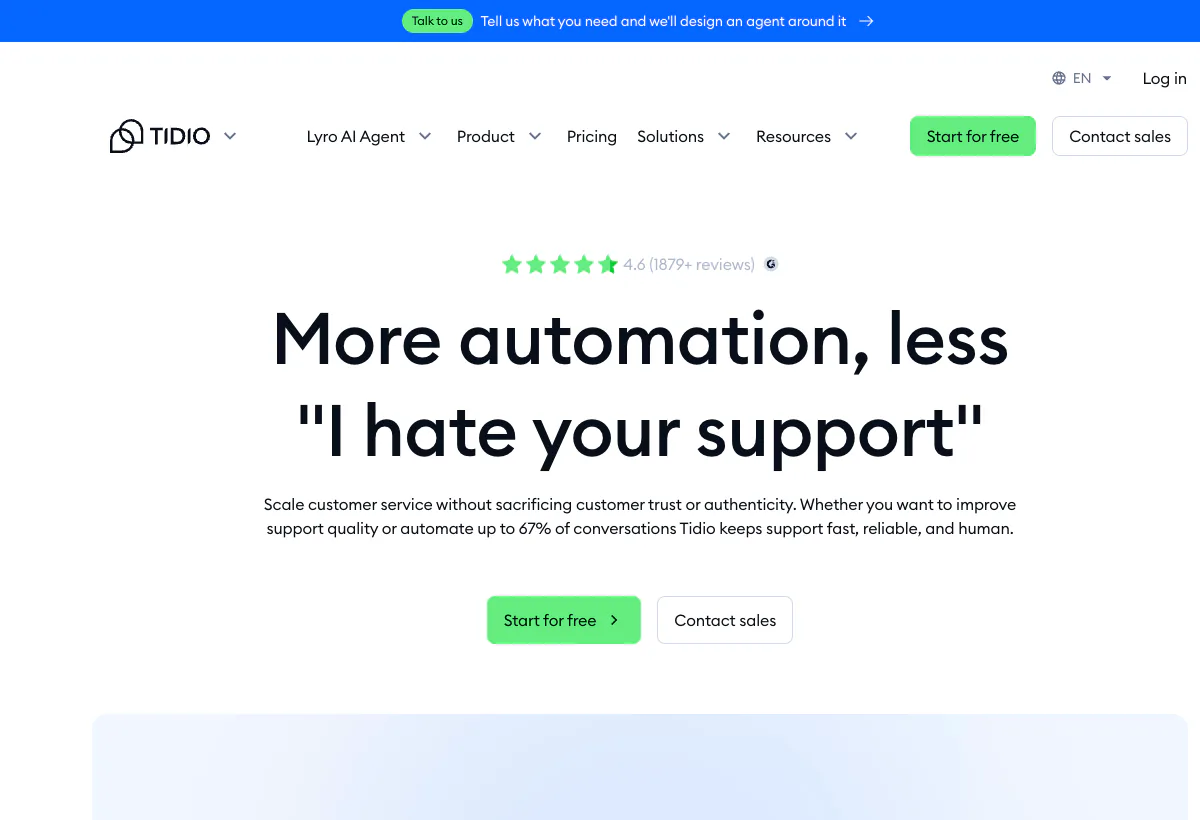
Is Tidio worth it?
Tidio is worth it for small teams that want live chat, a visual Flows builder, and Lyro in one product, with a free plan that is actually usable for a quiet site. It is not worth it as a pretend enterprise helpdesk. Public annual prices from the official FAQ and pricing page, checked August 19, 2026: Starter $24.17 per month for 100 billable conversations, Growth from $49.17 per month starting at 250 billable conversations and scaling toward 2,000, Plus from $300 per month plus usage, Premium custom. Annual billing is advertised as two months free, which is why Starter’s monthly equivalent is $29 and Growth’s is $59.
Best for shops and sites that will operate the widget themselves. Lyro can also be bought as “AI Agent only” for Zendesk or Salesforce, so Tidio is not only a helpdesk rip-and-replace. The constraint is the quota design: Lyro’s first 50 chats are lifetime, Flows’ first 100 visitors are the free grant, and self-serve seats cap at 10. Model all three before you call Tidio “the cheap one.”
How we evaluated this
We evaluated Tidio as a three-product bundle: help desk, Lyro, and Flows. Scoring weights quota honesty, Lyro grounding, handoff quality, Shopify Action depth versus Gorgias, and the Plus/Premium ceiling. Tests: the live calculator after the 50 lifetime Lyro chats, a real order Action, quota-stop behavior, and whether 10 seats cover peak. Official sources were rechecked August 19, 2026.
Pricing calculation to run
Price billable conversations, Lyro, and Flows as three lines, not one Starter card.
Tidio’s marketing starts at free or $24.17. That is the help-desk slider on annual billing. Lyro and Flows are not bundled as a monthly AI allotment on Free or Starter. The pricing page is explicit: your first 50 Lyro conversations are free for the lifetime of the account, and your first 100 Flows visitors are the free grant. After that you buy a monthly Lyro quota (50 to 1,000 on self-serve, more on Plus and Premium) and a Flows visitor pack (2,000 to 100,000). Treating Tidio as “$25 live chat with AI included” is how teams get surprised in month two.
- Count human billable conversations and tickets separately from Lyro. Tidio’s own FAQ prices Starter at $24.17 annual for 100 billable conversations and Growth at $49.17 annual from 250. Growth then steps with volume. Tidio’s February 2026 chatbot-pricing blog puts about 1,000 conversations near $180 per month on that slider.
- Add Lyro as its own line. The official Lyro page says conversations start from $0.50 and “pay just $0.5 per conversation.” The same company’s February 2026 blog quotes $32.50 per month for 50 AI conversations as the add-on people actually buy. Those two official figures are different views of the same meter (per-conversation versus a 50-pack). Use the live calculator, not a blended average.
- Add Flows visitors if you greet, recover carts, or qualify leads with the visual builder. The free 100 visitors is a demo. Paid packs start at 2,000 visitors on the pricing slider.
- Watch the 10-seat cap on Free, Starter, and Growth. Plus is where custom seats, departments, multiproject, OpenAPI, and custom branding show up, from $300 per month plus usage.
- Premium is a different product: from 3,000 Lyro conversations, a advertised 50% resolution-rate guarantee, pay-per-resolution billing, SSO, and Lyro as a managed service. Do not compare Premium’s promise to Starter’s sticker.
Worked example: a Shopify shop with 400 human conversations, 150 Lyro conversations, and 5,000 Flows visitors in a normal month. Help-desk Growth at 400 billable conversations sits above the $49.17 floor. You still add a Lyro pack at or above 150 (the slider offers 150 or 200) and a 5,000-visitor Flows pack. Using Tidio’s $32.50-per-50-Lyro blog figure as a floor, 150 Lyro chats are three packs, about $97.50, or $0.50 times 150 = $75 if the per-conversation rate applies. Either way the AI line can exceed Starter’s entire help-desk fee. Add Flows and you are in a different budget than “we bought Growth.”
Peak month: 800 human conversations, 400 Lyro, 15,000 Flows visitors. Lyro does not silently keep answering. When the quota is gone, Lyro stops until you raise the limit. That is safer than Intercom’s open $0.99 meter, and worse if Black Friday is a weekend and nobody is awake to upgrade. Put a named owner on quota alerts. If you need Lyro to stay up no matter what, you are a Plus or Premium conversation, not a Growth slider.
Lyro-only path: Tidio will sell Lyro onto Zendesk or Salesforce so you pay for AI conversations without moving the desk. Compare that SKU to standalone Fin: conversation packs versus $0.99 outcomes.
Who Tidio fits best
Strengths
- Real free plan: 50 billable conversations per month, 10 seats, ticketing, 50 one-time Lyro chats, 100 Flows visitors. Good for a live test, not a fake 14-day clock only.
- Fast widget: Shopify and WordPress installs are the happy path. A founder can greet visitors the same afternoon.
- Two bot styles: Flows for scripted greetings, scarcity, and cart recovery. Lyro for FAQ-style language over your knowledge. Most small shops need both, which is why the two meters exist.
- Lyro languages: official FAQ says 45-plus languages, with the widget itself offering pre-translated packs.
- Actions: first Action is free. Paid Lyro quota (50-1,000) includes full Actions, including product recommendation and, on Growth and up, native Shopify actions.
- Mobile apps: agents can answer off-hours without a full contact-center client.
- Lyro-only SKU: keep Zendesk or Salesforce, add Tidio’s agent. Useful when a migration is politically impossible.
Limitations to verify
- Lyro’s 50 free conversations do not refresh. Starter does not include a monthly Lyro allotment. Budget the add-on on day one if AI is the reason you are here.
- Self-serve seats stop at 10. Departments, multiproject, OpenAPI, custom branding, and custom limits are Plus.
- SSO, compliance packaging, managed Lyro, and a resolution-rate guarantee are Premium.
- Analytics on Free and Starter are basic. Advanced analytics sit higher on the comparison table.
- Shopify Actions are not Gorgias. Order lookup may exist. Deep refund, multi-store macros, and revenue-in-the-ticket reporting are not why Tidio exists.
- Instagram, Messenger, and WhatsApp are listed as integrations. Confirm which plan and which third-party fees apply. Do not assume native parity with a WhatsApp suite.
- When Lyro quota hits zero, the bot stops. There is no Intercom-style “keep going at $0.99” unless you are on a Premium pay-per-resolution deal.
Channel coverage to verify
Tidio started as website live chat and still behaves like one. Email, social, and tickets were added around that widget. Demo each channel you promise customers, on the plan you will actually buy.
- Website live chat widget, including proactive Flows, operating hours, and the chat page on paid plans.
- Email mailboxes into the Tickets view. Confirm threading and which mailboxes count as billable conversations.
- Messenger integration, plan-dependent.
- Instagram DM, often called out as a higher-tier integration. Verify on the comparison table for your plan.
- WhatsApp via Tidio’s integration pages. Treat provider fees as extra until a quote says otherwise.
- Lyro on Zendesk or Salesforce if you choose the AI-agent-only SKU.
- Mobile SDK appears on Premium. In-app chat for a consumer app is not a Starter feature.
Workflow execution and handoff
The Tidio workflow that works is: Flow greets based on URL or behavior, Lyro answers from FAQ or site content, a human takes over from the same inbox with the transcript, visitor path, and notes. Handoff is simple on purpose. There is no Zendesk-style approval workflow or SLA pause. Configure handoff for pricing pages, demo requests, negative sentiment if you have it, and explicit “talk to a person.”
Lyro Actions are the difference between a FAQ bot and a useful agent. The first Action is free so you can try a lookup. Full Action access requires a paid Lyro quota. Shopify-native actions show on Growth and above in the public comparison table. Test the exact Action on a real unpaid order, a refund request, and a “where is my order” with a tracking number. If Lyro can only paste a help article, you do not yet have an ecommerce agent.
- Proactive Flows on pricing, checkout, and exit intent, counted against visitors reached, not against Lyro.
- Lyro FAQ upload, scraper, and (on higher plans) Zendesk article import.
- Lead capture before handoff, so sales is not hunting an anonymous visitor.
- Offline auto-reply and operating hours so after-hours Lyro is intentional, not an accident.
Pricing checked August 19, 2026
Tidio pricing: $0 to $24.17, then Growth, Plus, and two AI sliders
The public page is a calculator plus a comparison table. Annual billing is labeled “2 months free.” The official FAQ, checked August 19, 2026, lists Starter at $24.17 per month billed annually, Growth at $49.17, Plus at $300, and Premium custom. The pricing page also shows Growth starting at $49.17 with “from 250 billable conversations.” Plus is “$300 per month plus monthly usage.” Figures below prefer those official pages. Lyro pack dollar amounts other than Tidio’s own $32.50 / 50 and $0.50 per conversation should be confirmed on the live sliders because the calculator is interactive.
| Plan | Public price | Included capacity / meter | Best fit |
|---|---|---|---|
| Free | $0/mo | 50 billable conversations per month, 10 seats, ticketing, 50 Lyro conversations once (lifetime), 100 Flows visitors once. 7-day paid trial available on paid plans, no card required for Free. | Testing a widget on a quiet site |
| Starter | $24.17/mo annual about $29/mo billed monthly | 100 billable conversations, 10 seats, live visitors list, operating hours, chat page. Still the lifetime 50 Lyro and 100 Flows grants unless you buy quotas. | Solo operators who mostly need human chat |
| Growth | From $49.17/mo annual about $59/mo monthly at the 250-conversation floor | From 250 up to 2,000 billable conversations on the public slider. 10 seats. Advanced analytics, Shopify actions, macros, more visitor history. Lyro 50-1,000 and Flows 2,000-100,000 as paid sliders. Tidio’s blog cites ~$180/mo near 1,000 conversations. | Small teams with real chat volume and a Lyro add-on |
| Plus | From $300/mo plus usage | Custom billable conversations, custom seats, departments, multiproject, custom branding, ticketing automations, OpenAPI, larger attachments, dedicated success manager, discounted usage rates, live chat support from Tidio. | Agencies and multi-brand teams that outgrew 10 seats |
| Premium | Contact sales | From 3,000 Lyro conversations, advertised 50% Lyro resolution-rate guarantee, pay-per-resolution billing, Mobile SDK, AI insights and CSAT, super admin, custom analytics, Advanced Copilot, SSO, compliance, Lyro as a managed service. | Brands that want Tidio to operate Lyro with a contractual resolution story |
Sources: Tidio official pricing page and Tidio FAQ. Confirm live slider totals, monthly versus annual, taxes, and over-quota behavior before paying.
Lyro and Flows meters checked August 19, 2026
Lyro AI and Flows quotas
| Meter | Public price | Included capacity / meter | Best fit |
|---|---|---|---|
| Lyro AI conversations | From $0.50 per conversation on the Lyro page. Tidio blog lists $32.50/mo for 50 | 50 lifetime free. Paid monthly quotas 50, 100, 150, 200, 300, 500, 750, 1,000 on the public slider. 1,000-plus is custom. Quota exhaustion stops Lyro. First Action free. Full Actions with a paid quota. | FAQ and Shopify lookup automation beside human chat |
| Lyro AI Agent only | Pay for AI conversations (no Tidio help-desk seats required) | Lyro on Zendesk, Salesforce, or another desk. Same conversation meter, without moving your inbox. | Teams that already have a helpdesk |
| Flows visitors reached | Slider-based (confirm live pack price) | 100 visitors free (grant). Paid packs 2,000 to 100,000 on the public slider, then custom. Counts proactive automation reach, not Lyro chats. | Cart recovery, greetings, and lead qualification |
| Premium Lyro | Custom, pay-per-resolution option | From 3,000 Lyro conversations. Advertised 50% resolution-rate guarantee. Managed service. | When you need a contractual AI operating partner |
Sources: Tidio pricing calculator, Lyro product page, and Tidio’s chatbot pricing article (February 2, 2026). If the $0.50 and $32.50 figures disagree on your calculator, use the calculator total in the contract.
AI capability: Lyro versus Flows
Lyro is the LLM agent. It reads FAQs, scraped site content, optional Zendesk articles, and Guidance (5 slots on lower plans, up to 10 on Plus, 10-plus on Premium). Flows is not Lyro. Flows is a visual, rules-based chatbot. Buyers who say “we turned on the Tidio bot” often mean a Flow that cannot answer a novel question. Keep the names straight in training and in the budget.
Tidio advertises Lyro resolution rates up to 67% in marketing and a 50% guarantee on Premium. Treat both as vendor claims. Your number depends on FAQ quality and whether Actions can see orders. Ground Lyro in short Q&A, not a 40-page returns PDF. Force handoff on refunds, legal, and anything the knowledge base does not contain. When retrieval is empty, a small-business bot will still try to be helpful. That is how you get a fabricated shipping date.
- Guidance: written rules Lyro must follow. Five is tight if you have a store, a subscription SKU, and a wholesale exception.
- Actions and Lyro Connect: live system calls. Confirm which connectors are native versus Zapier-shaped.
- Product recommendation: behind a paid Lyro quota on the comparison table.
- Copilot: a reply assistant for humans, separate from Lyro conversations. Advanced Copilot is Premium.
- Lyro custom name: plan-gated. If the bot saying “Lyro” is a brand issue, check the gate before you screenshot the widget for a client.
Feature areas to verify
- Live chat widget, design, languages, and operating hours.
- Lyro knowledge: FAQ upload, scraper, Guidance, test inbox.
- Flows builder: sales templates, FAQ templates, visitor-reach counter.
- Ticketing, macros, automatic assignment, satisfaction survey.
- Shopify integration and native Actions on your plan.
- Visitor list, viewed pages, notes, and live typing preview (plan-gated).
- Messenger, Instagram, WhatsApp, and email mailboxes.
- Mobile iOS and Android agent apps.
- OpenAPI, departments, and multiproject if you are Plus-shaped.
- SSO and managed Lyro if you are Premium-shaped.
Analytics and operating visibility
Basic analytics cover volume and response time. Advanced and custom analytics climb toward Premium. Ask for Lyro, Flows, and billable-conversation burn on one screen, and export unknown Lyro questions weekly as your FAQ backlog. Deflection without that list is how Tidio looks fine while customers open email instead.
Security, data handling, and compliance
Tidio’s security page and Trust Center state a completed SOC 2 Type II audit (2026 update), GDPR, CCPA, encryption in transit and at rest, and a DPA inside the terms for EU, UK, and Swiss customers. The FAQ also cites the EU voluntary AI Pact. SSO is a Premium item on the pricing comparison, not a Starter toggle.
- Request the SOC 2 Type II report, pentest letter, and HECVAT-Lite from the Trust Center before connecting Shopify customer data.
- 2FA and role-based access exist. Map them so contractors cannot export the visitor list.
- Confirm whether Lyro conversations train shared models. Get the answer in the DPA, not in a chat with the in-app bot.
- If you need SSO or a named compliance pack, you are shopping Premium, not Growth.
- Tidio participates in the EU-US Data Privacy Framework per its terms. Legal should still read SCCs and subprocessors.
What questions should you ask before buying Tidio?
- On the live calculator, what is the monthly total at our billable conversations, Lyro chats, and Flows visitors, annual versus monthly?
- Do the 50 Lyro conversations refresh, or are they still a one-time grant on our target plan?
- What happens the hour we exhaust Lyro during a sale? Hard stop, or auto-upgrade?
- Which Shopify Actions work on Growth without Plus?
- Are Instagram, Messenger, and WhatsApp included, and who bills the messaging provider?
- Is 10 seats enough at peak, including part-time staff on mobile?
- Can we export Lyro unknowns, CSAT, and quota usage?
- If we only want Lyro on Zendesk, what is that SKU’s minimum?
- When do we hit Plus ($300 plus usage) or Premium (SSO, managed Lyro)?
- Who on our team owns FAQ updates every week?
What red flags should you watch for with Tidio?
- The sales deck quotes $24.17 and shows Lyro in the screenshot without a Lyro line item.
- Nobody notices the 50 Lyro chats are lifetime until they vanish.
- Quota hits zero on a Saturday and Lyro is silent while ads still run.
- You need SSO, departments, or more than 10 seats and you are still on Growth.
- Shopify “integration” is the widget only, with no Action on orders.
- Flows visitor pack is sized for a normal Tuesday, not a campaign.
- You expect Zendesk-like SLAs from a product that does not sell them on self-serve.
- The vendor will not run Lyro against your real FAQ and one nasty return ticket.
What are the best alternatives to Tidio?
Stay on Tidio if the widget-plus-Lyro shape matches the team. Move when the meter or the governance does not. Tidio is not an alternative to itself.
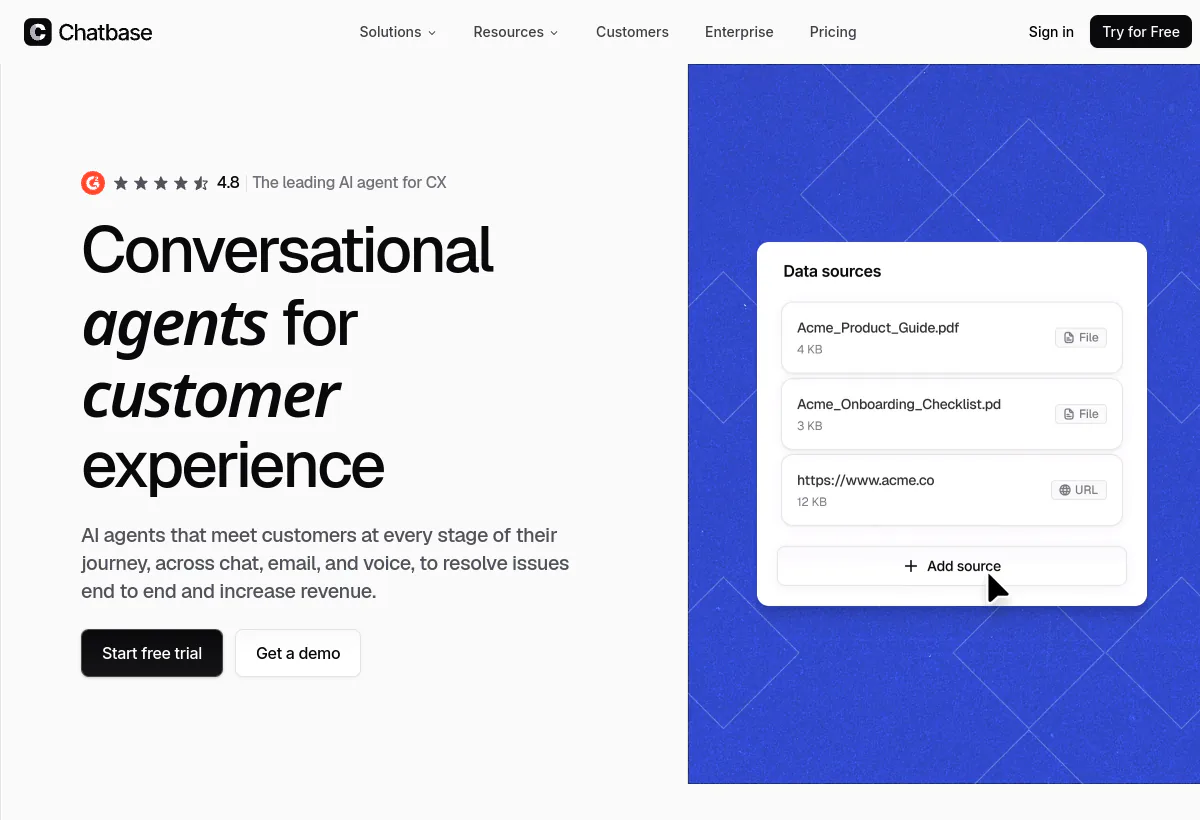
- ChatbaseChoose Chatbase when you want a website agent on message credits, more model choice, and you do not need Tidio’s live-chat seating model.
- Intercom FinChoose Intercom Fin when you are ready to pay $0.99 per outcome on top of a full customer-messaging suite.
- GorgiasChoose Gorgias when Shopify tickets, returns, and store-native macros are the workload, not a live-chat widget.
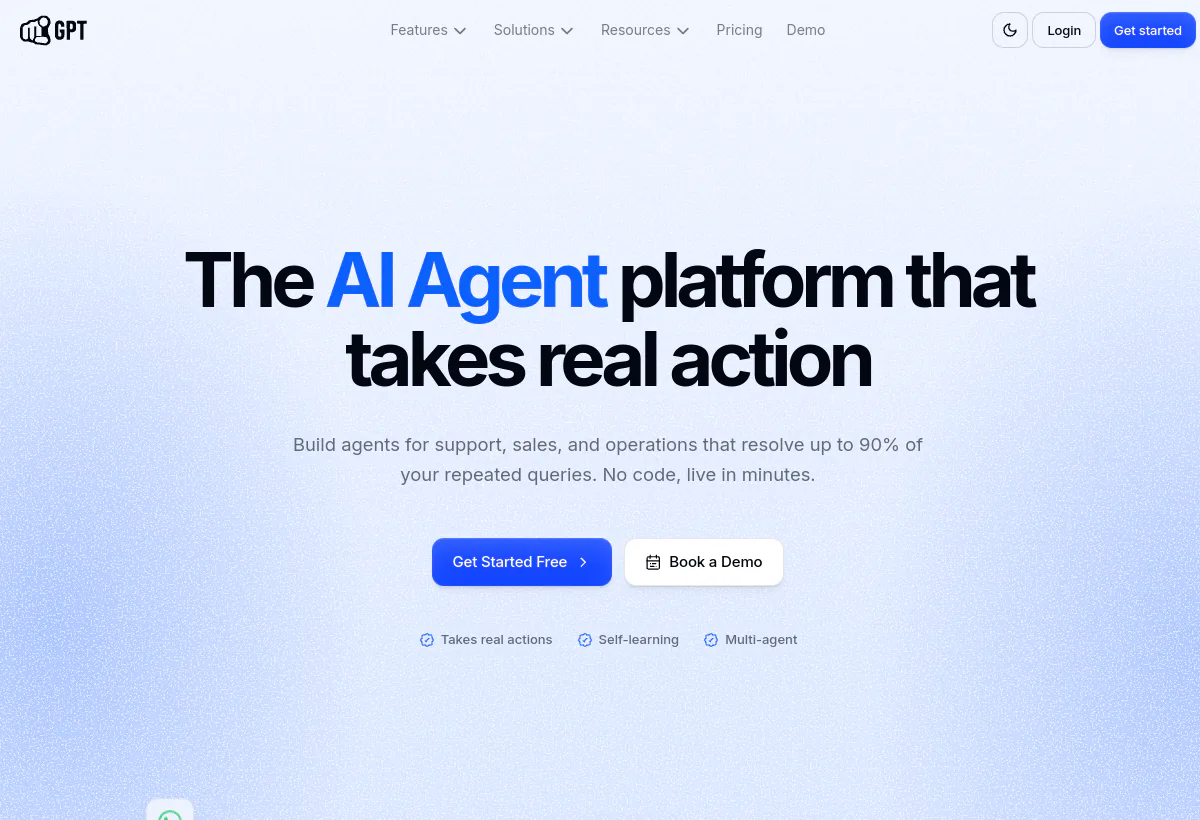
- YourGPT AIChoose YourGPT when you need omnichannel agents and workflow depth beyond a small-business inbox.
- Zendesk AIChoose Zendesk AI when ticketing governance and Suite SLAs are already (or about to be) the operating system.
Workflow test
What Tidio needs to prove on your site
- Ground Lyro.Load your FAQ and one product URL. Ask a documented question and an undocumented one. Lyro should answer the first from source and hand off the second.
- Fire a Flow.Trigger a greeting on the pricing page and confirm it increments visitors reached, not Lyro conversations.
- Take an Action.On a paid Lyro quota, look up a real order. If this fails, you have a chatbot, not a store agent.
- Hand off and exhaust.Transfer to a human on mobile with full context. Then burn a tiny Lyro quota in staging and confirm the bot stops instead of silently billing a surprise pack.
Related reading
Related Reading
Official sources to verify
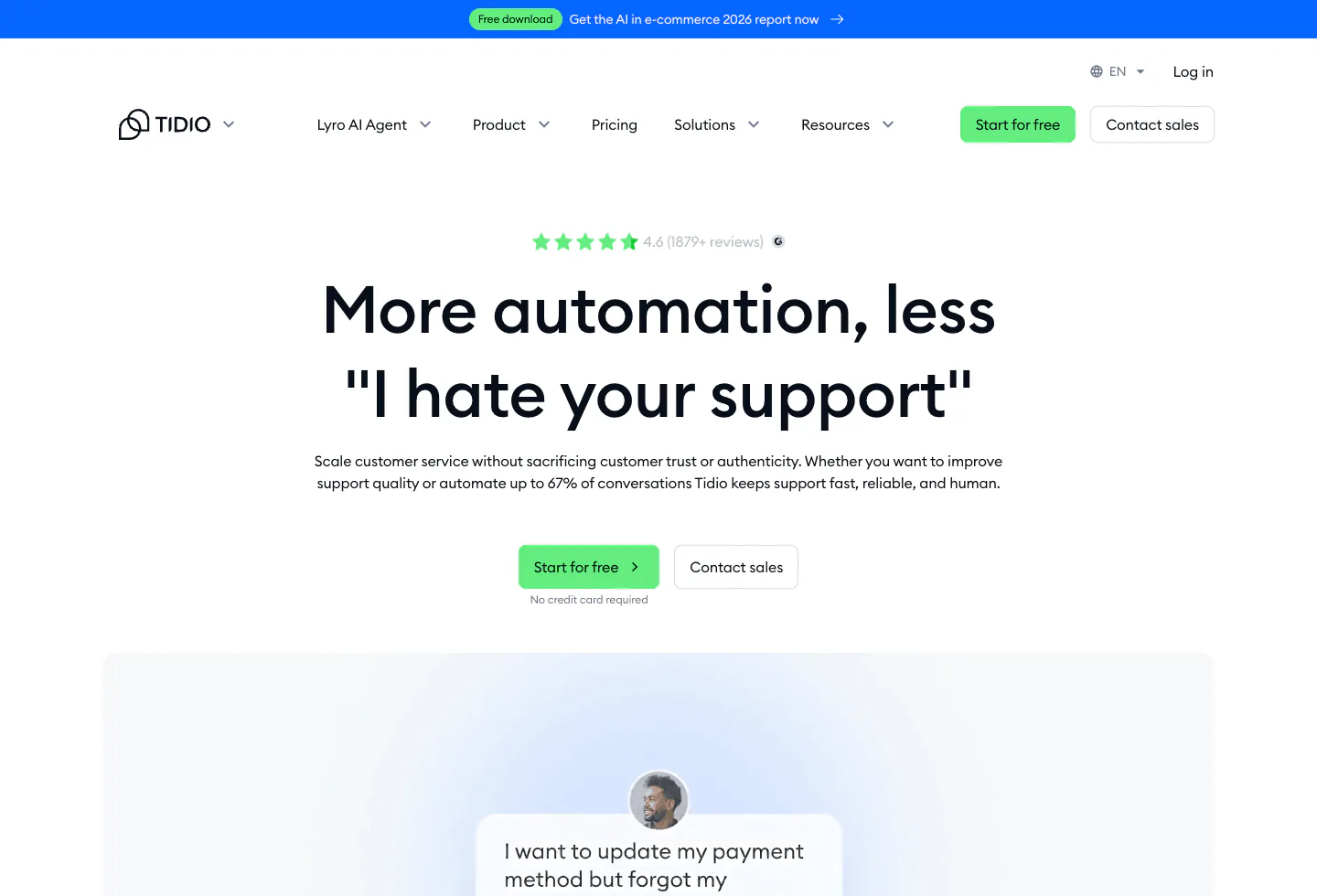 Official Tidio product page
Source snapshot 2026-08-19 - tidio.com
Live chat, Lyro, Flows, and help-desk positioning.
Official Tidio product page
Source snapshot 2026-08-19 - tidio.com
Live chat, Lyro, Flows, and help-desk positioning.
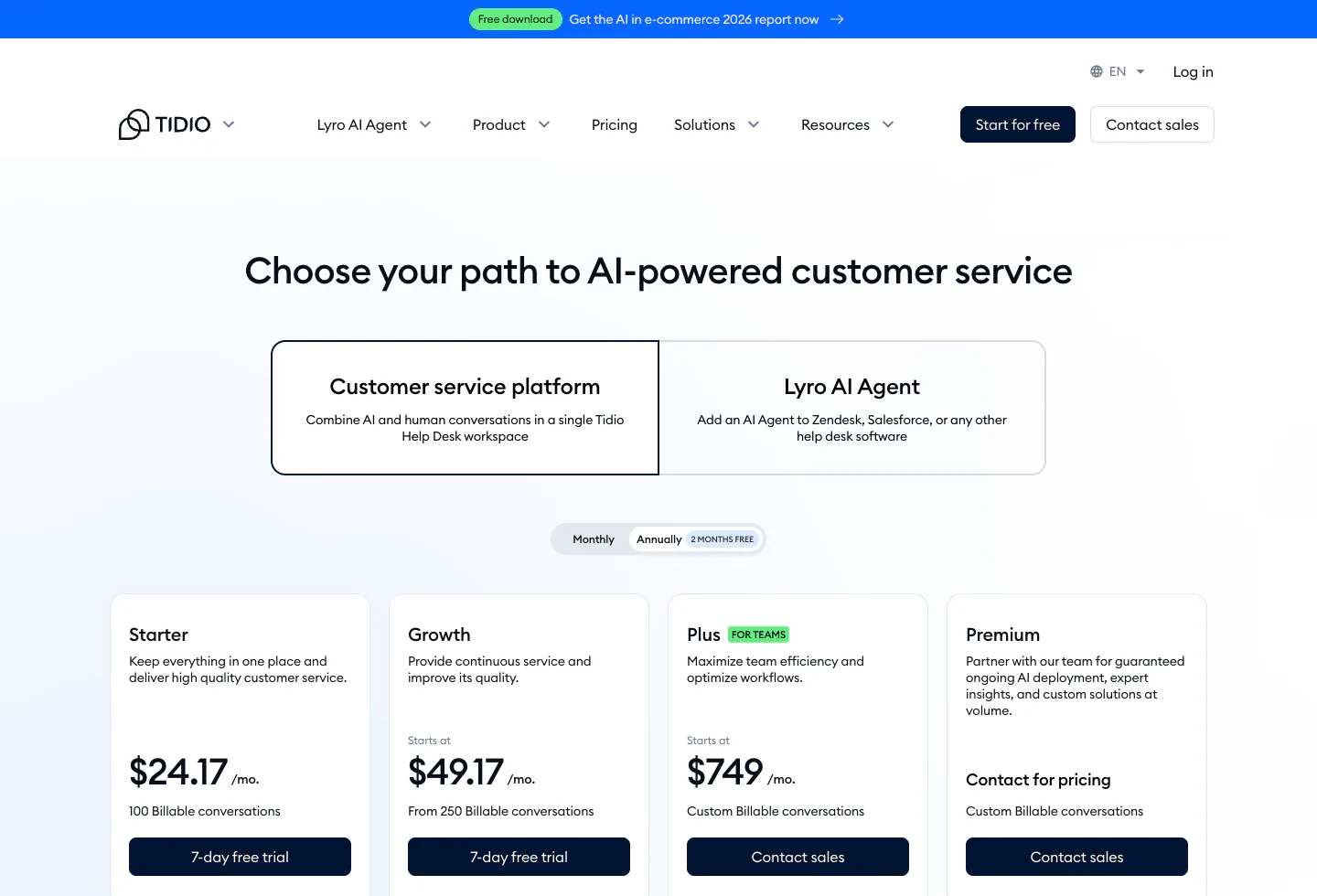 Official Tidio pricing page
Source snapshot 2026-08-19 - tidio.com
Free, Starter, Growth, Plus, Premium, and the three usage sliders.
Official Tidio FAQ
Source snapshot 2026-08-19 - tidio.com
Starter $24.17, Growth $49.17, Plus $300, Premium custom, SOC 2 Type II.
Official Tidio security page
Source snapshot 2026-08-19 - tidio.com
SOC 2, GDPR, CCPA, and Trust Center pointer.
Official Tidio pricing page
Source snapshot 2026-08-19 - tidio.com
Free, Starter, Growth, Plus, Premium, and the three usage sliders.
Official Tidio FAQ
Source snapshot 2026-08-19 - tidio.com
Starter $24.17, Growth $49.17, Plus $300, Premium custom, SOC 2 Type II.
Official Tidio security page
Source snapshot 2026-08-19 - tidio.com
SOC 2, GDPR, CCPA, and Trust Center pointer.
Claim and source ledger
What this profile is based on
Public Tidio homepage, pricing calculator, FAQ, Lyro page, February 2, 2026 chatbot-pricing blog, security page, and Trust Center, rechecked August 19, 2026. Plan stickers ($0, $24.17, $49.17, $300) come from the FAQ and pricing page. Lyro $0.50 per conversation comes from the Lyro page. $32.50 per 50 Lyro conversations comes from Tidio’s own blog. Existing product and pricing screenshots in /images/sources/ are reused.
What we did not verify
We did not complete a paid Growth checkout, so exact dollar totals for every Lyro and Flows pack combination are calculator-dependent. We did not measure Lyro accuracy, test WhatsApp provider fees, or review the SOC 2 report under NDA. Premium’s 50% resolution guarantee is a vendor offer, not an independent benchmark. Confirm live slider math in-account.
How we scored fit
Editorial fit weights three-meter honesty, time-to-widget, Lyro versus Flows clarity, and the 10-seat ceiling. It is not a CSAT score or a resolution-rate study.
Should you choose Tidio?
Choose Tidio when a small team needs a widget this week, a human inbox, and a bounded Lyro quota they are willing to pay for as a second line. The free plan and $24.17 Starter are honest for human chat. They are not an AI plan. Add Lyro and Flows explicitly, and decide in advance what happens when the quota hits zero.
Best for small Shopify and WordPress teams. Move to Gorgias when order operations dominate, to Intercom Fin or Zendesk AI when the suite is the destination, and to Chatbase when you want an agent without live-chat seating. If your calculator has only one slider filled in, you are not done.
FAQ
Common questions
What is Tidio best used for?
Small-business live chat, Flows automation, and Lyro FAQ handling on a website or Shopify store. It is a widget with a light help desk, not a contact center.
Is Tidio free?
Yes. Free includes 50 billable conversations per month, 10 seats, ticketing, 50 one-time Lyro chats, and 100 Flows visitors. Free Lyro does not refill each month. Paid plans have a 7-day trial.
How does Tidio pricing work?
Three sliders. Human conversations set Free, Starter ($24.17 annual), Growth (from $49.17), Plus (from $300 plus usage), or Premium (quote). Lyro and Flows are separate paid quotas after small one-time grants. Annual is advertised as two months free.
How much is Lyro?
The Lyro page says from $0.50 per conversation. Tidio’s February 2026 blog lists $32.50 per month for 50. Public sliders run 50 to 1,000 per month, then custom. Lyro stops when the quota is empty unless you are on Premium pay-per-resolution. Use the calculator.
Can Tidio replace a helpdesk?
For a small team’s chat and email, yes. For SLAs, custom roles, or 40 agents, look at Zendesk AI or Intercom Fin. You can also keep those desks and buy Lyro only.
Does Tidio work with Shopify?
Yes. Native widget, and on Growth-plus the public table lists native Shopify actions. Depth is not Gorgias. Test order lookup and any refund Action before you promise shoppers the bot can handle orders.
Tidio vs Intercom?
Tidio for a lower entry price, a real free tier, and simple setup. Intercom Fin when you want outcome-priced AI and will pay seats plus $0.99 outcomes.
Is Tidio secure?
Public claims include SOC 2 Type II (2026), GDPR, CCPA, encryption, and a DPA in the terms. SSO is Premium. Request Trust Center artifacts before connecting customer PII.
Who should skip Tidio?
Skip it if you need more than 10 self-serve seats, SSO on day one, deep commerce tickets, or monthly free Lyro. Also skip it if nobody will maintain FAQs.
How long does setup take?
A Shopify or WordPress widget can be live in under an hour. Production Lyro with Actions and Flows takes days. The 50 free Lyro chats are enough to fail fast, not to finish training.
Also review